|
Getting your Trinity Audio player ready...
|
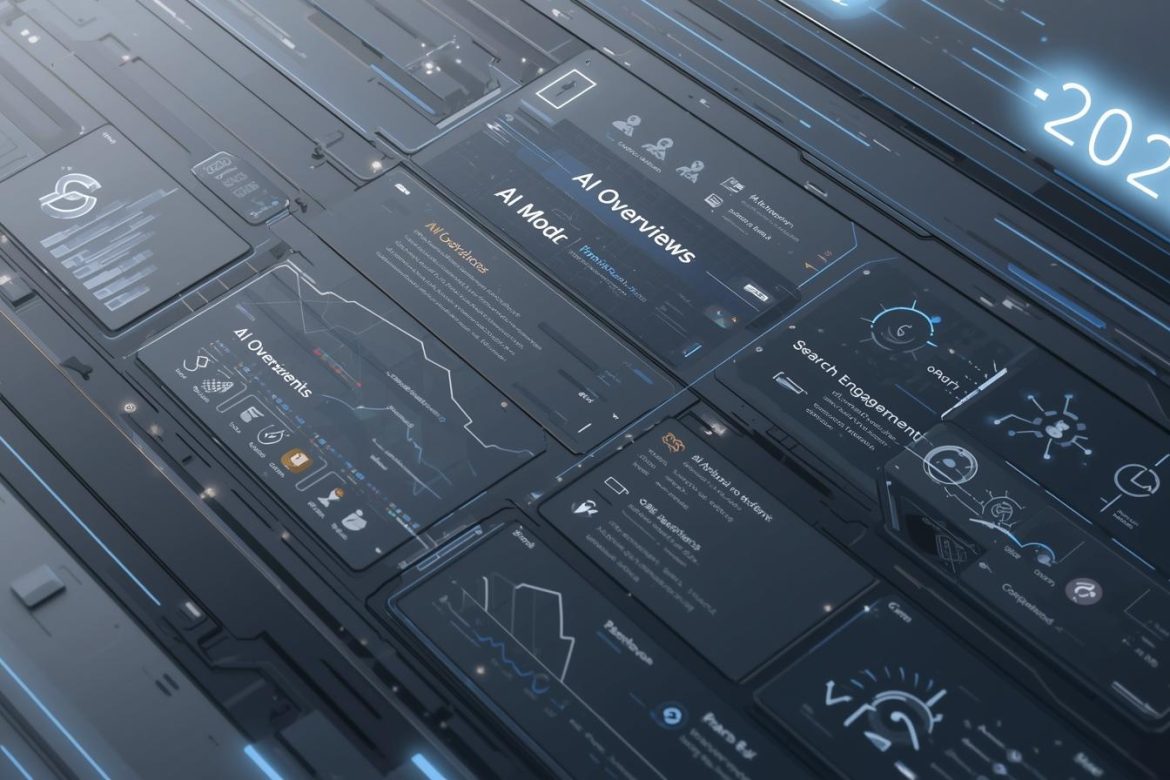
It’s happened: your organic traffic reports are showing a 30% dip year-over-year, but your phone hasn’t stopped ringing. Welcome to the paradox of Search in 2026. For a decade, we chased “blue links” and click-through rates, but today, Google’s AI Overviews and fully immersive “AI Modes” (like Gemini and ChatGPT Search) are answering your customers’ questions without them ever visiting your website. The panic is real for businesses still playing by 2024 rules, but for the smart ones, this isn’t a crisis—it’s a filter that removes tire-kickers and delivers high-intent buyers. If you want to survive the “Zero-Click” era, you stop trying to rank for clicks and start optimizing to be the source.
TL;DR: The “Do This First” Checklist
If you only have 5 minutes, forward this list to your marketing lead or web developer immediately.
- Audit Your “Answerability”: rewrite the top 20% of your blog posts to include a direct, bolded, 40-word answer to the main user question in the first paragraph.
- Implement “Speakable” Schema: Ensure your technical team adds structured data that explicitly tells AI agents which parts of your content are suitable for voice and text summaries.
- Claim Your Entity: Verify your knowledge panels on Google and Bing; if the AI doesn’t know who you are, it won’t trust what you say.
- Diversify Platforms: AI pulls data from YouTube, TikTok, and Reddit. If you aren’t visible on video or forums, you’re invisible to the search brain.
- Focus on “Information Gain”: Stop publishing generic definitions. AI creates definitions. You must publish original data, contrarian opinions, or personal case studies.
- Optimize for “Near Me” Context: Ensure your Google Business Profile (and its Apple/Bing equivalents) lists specific services, not just general categories.
- Check Your Robots.txt: Ensure you aren’t accidentally blocking the new generation of AI crawlers (like
GoogleOtheror specific agent bots) that power these overviews.
The Landscape in 2026: AI Overviews vs. AI Mode
To win, you must understand the battlefield. The search bar is no longer just a query box; it’s a conversation partner.
1. AI Overviews (The “Smart Summary”)
You’ve seen these for years now. You ask, “How much does it cost to rewire a 1950s house?” and Google pushes the organic links down to show a comprehensive, AI-generated paragraph.
- The Change: In 2026, these are no longer static. They are dynamic, pulling real-time pricing and availability.
- The Goal: You don’t just want to be below the overview; you want to be the cited source inside it.
2. AI Mode (The “Agent Experience”)
This is the disruptive shift. Users on mobile devices are increasingly toggling into “AI Mode”—a fully conversational interface (powered by Gemini or competitors) where no traditional links are shown initially. The user asks a complex question, and the AI acts as a consultant, synthesizing answers from 4-5 trusted sources.
- The Reality: If you aren’t one of those 5 trusted sources, you don’t exist to that user.
Redefining “Visibility”
Forget “Traffic Volume.” That metric is a vanity number from the past.
- Old KPI: 1,000 visitors reading a generic article -> 5 conversions.
- New KPI: 100 AI citations -> 20 high-intent visitors -> 10 conversions.
- Visibility Now Means: Brand mentions, citations in AI answers, and “Share of Model” (how often an LLM mentions your brand when asked for recommendations).
The Strategy: How to Win the “Answer Engine” Game
The algorithms governing AI Search reward different signals than the traditional 10 blue links. Here is your action plan.
Phase 1: Content Upgrades (The “Information Gain” Factor)
AI models are trained on the entire internet. If your blog post just repeats what Wikipedia or Forbes says, the AI treats it as redundant “noise.” It will not cite you.
The Fix: You must provide Information Gain—new info that adds to the dataset.
- Original Data: Instead of “HVAC tips,” publish “Average Energy Savings for [City] Homes in 2025.”
- First-Hand Experience: Use phrases like “In our 15 years working on [Specific Roof Type]…” or “We tested 50 brands, and here is why…”
- Contrarian Views: AI often summarizes the consensus. Stand out by explaining why the consensus might be wrong for your specific customers.
Phase 2: Structural Engineering (Structuring for Machines)
AI bots are smart, but they are also lazy. They prefer content that is easy to parse.
- The “Inverted Pyramid” Style: Start every section with the answer, then explain the “why,” then provide examples.
- Lists and Tables: AI loves data tables. If you are an e-commerce brand, use comparison tables for specs. If you are a service, use pricing tables. These get picked up for “snapshots” more than paragraphs do.
- Schema Markup is Non-Negotiable: You need
Organization,Service,FAQ, andArticleschema. In 2026, we also recommendmentionsattributes to link your content to other authoritative entities.
Phase 3: The “Digital PR” Moat
In the era of AI, E-E-A-T (Experience, Expertise, Authoritativeness, Trustworthiness) is the primary ranking factor. AI models rely on a “Knowledge Graph” to verify facts.
- Get Cited Elsewhere: If the local newspaper or a major industry blog mentions your brand, the AI connects your business to that topic.
- Real Reviews: AI reads sentiment, not just stars. Detailed reviews mentioning specific services (e.g., “They fixed my slab leak quickly”) teach the AI exactly what you do.
Mini Case Studies: Theory in Practice
Case Study A: The Local Service Business
Business: Elite Plumbing & HVAC (Local SMB)
The Problem: Traffic to their “DIY drain cleaning” posts dropped 60% because AI Overviews answer those questions instantly.
The Pivot:
- They stopped writing generic “How-to” guides.
- They started writing “Hyper-Local” content: “Why Clay Soil in [County Name] Cracks Pipes” and *”The Cost of Permit https://www.google.com/search?q=%23123 for Water Heaters in [City].”
- They added a “Quote Calculator” tool that AI agents could interface with.The Result: Overall traffic remained low, but calls from the website increased 40% because the users finding them had specific, complex problems the AI couldn’t solve alone.
Case Study B: The Niche E-Commerce Brand
Business: Urban Planter (Sells high-end ceramic pots)
The Problem: Amazon and Temu dominate generic search terms like “buy ceramic pots.”
The Pivot:
- Focused on Multimedia Visibility. They created 60-second YouTube Shorts and TikToks demonstrating the durability of their pots (dropping them, freezing them).
- They added
Productschema withPros/Consmarkup. - When users asked AI, “What are the most durable pots for freezing winters?”, the AI cited Urban Planter’s crash-test videos as proof.The Result: They earned a “Best for Winter” badge in Google’s AI shopping summary, driving a 15% higher Average Order Value.

Common Mistakes (How to Get Ignored by AI)
- Chasing “Zero-Volume” Keywords incorrectly: Don’t write about things nobody searches for. Write about things people search for, but answer them with unique expertise.
- Using AI to Write Everything: If you use ChatGPT to write your blogs, you are feeding the search engine its own regurgitated data. It knows. It will filter you out. Human editing is the premium signal of 2026.
- Ignoring Video: AI models are multimodal now. They “watch” videos to find answers. If you don’t have video content, you are missing 50% of the possible citation sources.
- Gatekeeping Pricing: AI agents prioritize transparency. If a competitor lists pricing (even ranges) and you don’t, the AI will recommend the competitor because it can provide a “complete” answer to the user.
Your 90-Day Roadmap to AI Visibility
| Timeline | Focus Area | Actionable Steps |
| Days 1–30 | Technical Foundation | • Install detailed Schema (LocalBusiness, Product, FAQ). • Audit site speed (Core Web Vitals must be green). • Update About Us page with robust author bios (prove you are human). |
| Days 31–60 | Content Retrofit | • Identify top 20 traffic pages. • Add “Direct Answer” summaries to the top of each. • Add original data, quotes, or local specifics to generic sections. • Remove fluff; aim for “high density” information. |
| Days 61–90 | Authority Building | • Solicit detailed reviews on Google/Trustpilot containing keywords. • Pitch one “Data Story” to local press to earn a high-quality backlink. • Create 3-5 short videos answering your most common customer FAQs. |
Conclusion: Adapt or Disappear
The “Click Economy” is fading, replaced by the “Citation Economy.” You don’t need to be the loudest voice in the room anymore; you need to be the most authoritative.
In 2026, the businesses that thrive won’t be the ones with the best keywords—they will be the ones with the best answers. The drop in clicks isn’t a failure; it’s a purification of your lead stream.
Need help navigating the AI shift?
At Krotov Studio, we don’t just do “SEO.” We build Digital Knowledge Graphs that force AI engines to recognize and cite your brand. From technical schema implementation to high-level content strategy, we prepare your business for the future of search.
